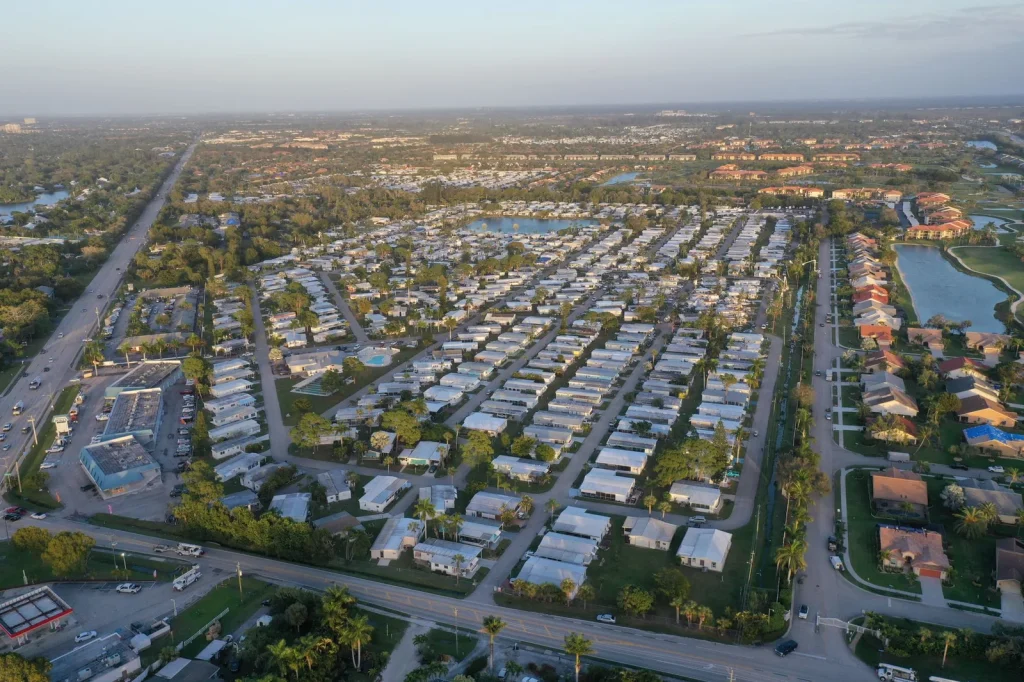
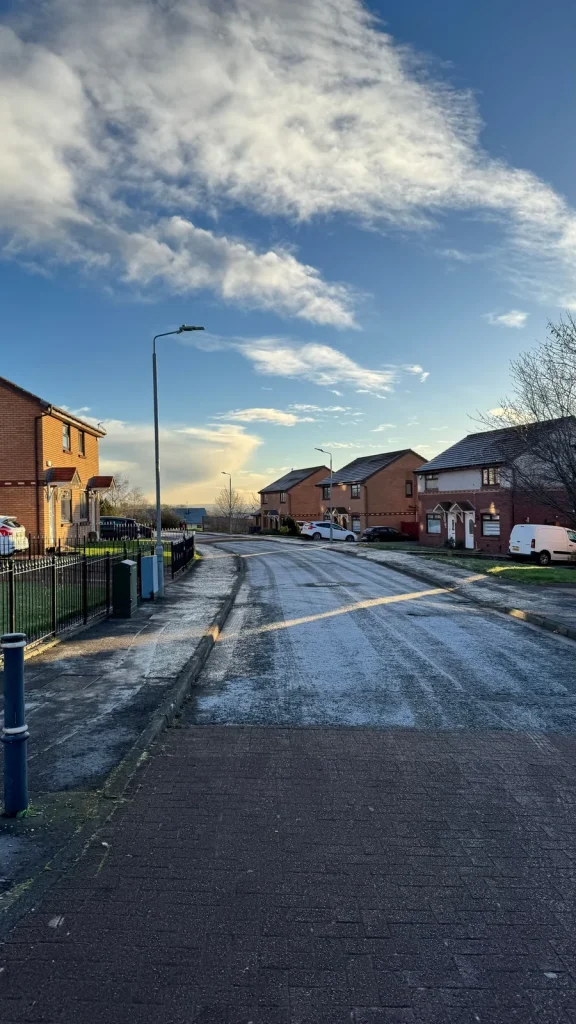
You’ve been looking at homes for a few weeks and you’re starting to notice a pattern. In one tab, there’s a brand-new house in a community that didn’t exist five years ago: clean lines, a builder warranty, and that new-paint smell you can practically imagine. In the other, there’s a 2004 home on a street with mature trees and a neighbor who’s already waving from the driveway. Both feel right for different reasons, and it’s genuinely hard to tell which one is the better move — because they’re not really the same decision at all.
That’s the truth most comparisons miss. New construction and resale aren’t “a good option and a compromise.” They’re two different sets of tradeoffs, and which one fits you better depends on your timeline, your tolerance for the unknown, and how you want your first year in the home to feel. Here in Central Florida, both paths are fully available, which is exactly why it’s worth understanding what each one actually involves before you fall in love with a browser tab.
The real differences at a glance
Before we get into the details, here’s the shape of it. New construction usually gives you a home that’s move-in ready in the literal sense: nobody has lived there, the systems are new, and there’s a warranty behind the work. In exchange, you’re entering a neighborhood that’s still taking shape, accepting a timeline you don’t fully control, and potentially taking on ownership costs that are higher than the listing price suggests.

Resale usually gives you an established neighborhood, mature landscaping, and a home with a history you can inspect. In exchange, you’re getting the property’s age and everything that comes with it: a roof that’s already used some of its life, systems that may be closer to replacement, and updates you may want to make with your own money and on your own schedule.
Neither is a better story. They’re just different ones, and the rest of this article is about making those differences concrete enough that you can recognize which one fits your life.
What buying new construction actually involves
Buying new construction often means buying in a newer master-planned community — think areas around Lake Nona or Horizon West, where entire neighborhoods are still being completed. You’re often choosing a model and a lot, sometimes before the house exists, and then living with a construction timeline that can stretch or shift. Weather, materials, and labor all play a role, and an estimated completion date is an estimate, not a promise.
That uncertainty doesn’t only affect your moving date. If construction stretches, it can outlast your mortgage rate-lock period, and extending a rate lock generally costs money. It’s worth asking your lender up front how a delay would be handled so the answer doesn’t surprise you in month nine.
The upside is real. Everything is new — roof, HVAC, appliances, plumbing — and there’s a builder warranty behind the work. You’re not inheriting someone else’s deferred maintenance. Warranty coverage varies by builder and contract, and it’s typically structured by category and duration rather than as one blanket promise: workmanship for a shorter period, major systems longer, structural elements longer still. Read the actual warranty, not just the brochure summary.
You’re also moving into a place that’s still maturing. Landscaping is young, some amenities may not be finished yet, and there are fewer resale transactions to show you what the home might be worth later because relatively few properties have changed hands. That doesn’t make it a bad buy. It just means you’re entering an earlier chapter in the neighborhood’s history rather than a later one.
What buying a resale home actually involves
Buying a resale home means buying something that already exists, in a place that’s had time to settle in. You can drive the street at 6 p.m. and see what the neighborhood actually feels like. You can look at how nearby homes have sold and get a sense of value based on real transactions. The trees are tall, the streets are lived-in, and the character of the area isn’t a rendering — it’s just there.
The tradeoff is age and the real consequences of it. A resale home has a history, and that history shows up in the roof, the water heater, the air conditioner, and in whatever the previous owners did or didn’t do. Some of that is a genuine advantage because it’s knowable: a good inspection can tell you a lot before you’re committed. And depending on the market when you’re buying, there may be more room to negotiate on an existing home than on a builder’s set pricing.
Neither path gives you fewer surprises, exactly — they give you different kinds of uncertainty. In new construction, the unknowns cluster around timeline and the future of the neighborhood. In resale, they cluster around what’s already there, which is exactly what you get to investigate before you commit.
Cost differences beyond the sticker price
This is where buyers on both paths get surprised, so it’s worth slowing down. The listing number is rarely the number that ends up defining your monthly life. We go deeper on this in The True Cost of Owning a Home, but the short version is that ownership cost is a stack, not a single figure.
On the new-construction side, two costs deserve attention. The first is a CDD assessment when the community is inside one; we’ll explain that distinction below. The second is a property-tax adjustment many buyers don’t anticipate: a newly built home’s first tax bill is often based on land or a partially completed structure, the lender escrows from that figure, and the following year brings both a higher bill and a shortage to make up. It’s predictable, and The True Cost of Owning a Home explains how to plan for it.
On the resale side, the cost that tends to catch people is insurance and system condition. Florida premiums vary materially with the specific property: roof age, construction type, and location can move the number significantly between two homes that look similar. Roof age affects both what you’ll pay and how some carriers view the risk, although Florida law limits how far an insurer can go based on roof age alone. An older roof doesn’t automatically disqualify a home, but it is a cost and timing question worth understanding before you buy. Florida Insurance, Explained walks through what actually drives that number.
On either path, the instruction is the same: get real figures for the specific property before you’re committed.
How CDDs and HOAs differ — and why CDDs aren’t a ‘new construction’ issue
People tend to blend these together, and they shouldn’t, because they pay for different things. An HOA is an ongoing fee for shared community services and standards: common-area landscaping, amenities, maintenance, and rules. A CDD is closer to a financing mechanism: it’s how the infrastructure that made the community possible — roads, drainage, utilities — gets paid for over time, and it’s collected on your property-tax bill rather than as an HOA invoice.
Here’s the part worth correcting if you’ve heard it framed differently. A CDD attaches to the community and the property, not to whether the home is new. A resale home inside an active district carries the same assessment structure as a brand-new home inside that district. At the same time, many established Central Florida neighborhoods have no CDD at all, and some older districts have retired some or all of their bond debt while continuing to assess for operations and maintenance.
So the question isn’t “new or resale?” The question is whether this property sits inside a district, what the current assessment is, and how much of it is bond debt versus ongoing operations. In many Central Florida communities, a CDD assessment runs roughly $1,500 to $3,000 a year, with some districts higher — about $125 to $250 a month or more on top of everything else.
We go deeper on that distinction in What Nobody Explains About HOA and CDD Fees, and it’s worth reading before you sign anything.
Why a newer community often has a higher CDD
Here’s the logic, with that distinction in mind. When a community is new, the bond that financed the infrastructure is still being paid down, so the debt-service portion of the assessment is still doing meaningful work. A district that’s been around longer may have paid that bond down or off, which is one less-visible reason a home in a mature community can carry a lower assessment than a comparable home in a newer district nearby, even though the operations-and-maintenance portion generally continues either way.
It doesn’t mean the newer community is overcharging. It means you’re arriving while that obligation is still active.
If you want the full breakdown of how this interacts with builder pricing, Builder Incentives and CDDs goes into more detail.
Choosing based on your timeline and priorities
If you strip away the emotion, a lot of this decision comes down to two practical questions: When do you need to be living there, and how much uncertainty are you comfortable carrying? If you need a home within sixty days and can’t float two housing payments or an in-between period, a resale that can close soon is a very different proposition from a build that may be ready “sometime in the spring.” If you have room in your timeline and you’d rather have everything new than everything settled, the wait may be exactly the right tradeoff.
It’s also worth being honest with yourself about what you enjoy. Some people get real satisfaction from a home that’s a blank slate and a neighborhood they’ll help shape. Others want to move into a place that’s already working, with a yard that’s grown in and neighbors who already know which restaurant delivers. Neither preference is more sensible than the other. They’re just different ideas of what home feels like.
Builder incentives and what they actually cost you
New-construction incentives can be genuinely valuable, but they’re worth reading carefully. A builder may offer to cover closing costs or buy down your interest rate, and those incentives are often tied to using the builder’s preferred lender or title company. That’s not inherently negative and doesn’t mean anything is being hidden, but it does mean the incentive is part of a package rather than a standalone discount, and packages are worth comparing.
The practical way to do that is simple: get a Loan Estimate from the builder-affiliated lender and a Loan Estimate from at least one outside lender, and put them side by side. Look at the rate, APR, lender charges and credits, and what the package costs over the period you realistically expect to keep the loan — not just the advertised value of the incentive. Sometimes the builder package genuinely is better. Sometimes it isn’t. The point isn’t to be suspicious; it’s to make sure you’re comparing the real total.
What you can inspect on each path
Both paths give you inspection opportunities. They just let you inspect different things at different times.
In a resale, you’re evaluating the home’s accumulated condition. A full inspection can reveal the age and condition of the roof, the HVAC and water heater, the electrical and plumbing systems, signs of previous leaks, and whether past work appears to have been done correctly. None of that guarantees a perfect house; it gives you a better-informed decision. It’s better to know before you buy that a roof has three years of useful life left than to discover it afterward.
In new construction, you’re evaluating workmanship as the home is being built, and you don’t have to rely only on the builder’s quality-control process or municipal inspections. Buyers commonly bring in an independent inspector at three points: pre-drywall, while framing, wiring, and plumbing are still exposed; before closing, alongside the final walkthrough; and at roughly eleven months, to catch anything covered by the builder’s first-year warranty before that window closes. That last one is easy to forget and hard to get back.
What a not-yet-completed home can’t give you is the thing a twenty-year-old house can: a track record. You can verify that the work was done correctly. You can’t yet see how it has held up.
Negotiation room in each scenario
Negotiation works differently on each path, and it helps to know that going in. With a builder, the base price is often more rigid — builders protect the comparable sales across the whole community — so they may have more flexibility on incentives, upgrades, or closing costs than on the sticker price. With a resale, you’re negotiating with an individual owner whose situation is specific, so depending on the market and how long the home has been listed, there may be more real room on price.
There’s more on that in Resale Homes in Established Neighborhoods. In either case, “room to negotiate” isn’t a fixed feature; it changes with the market, the season, and the specific home.
If you’re comparing these two paths and the decision still feels close, that’s normal — it usually is, because both can be genuinely good options depending on your situation. If it would help to talk through what the numbers and timelines actually look like for the home you’re considering, we’re happy to work through it with you at Verity. No pressure either way.
This article is educational and not legal, tax or financial advice. Insurance, property taxes, CDD assessments, warranty terms and builder contracts vary by property, community and agreement. For your specific situation, it’s best to consult a licensed professional — an attorney, CPA, lender, insurance agent, inspector or advisor, as appropriate — and to verify the actual figures and documents for the property you’re considering.